01 / 03
Plan the work
Safety begins with a clear understanding of the scope. Before execution, we discuss the work area, sequence, access, equipment, and the conditions that could affect the crew or surrounding operations.
From the fabrication shop to an active plant, safe execution depends on preparation, awareness, and people willing to speak up.
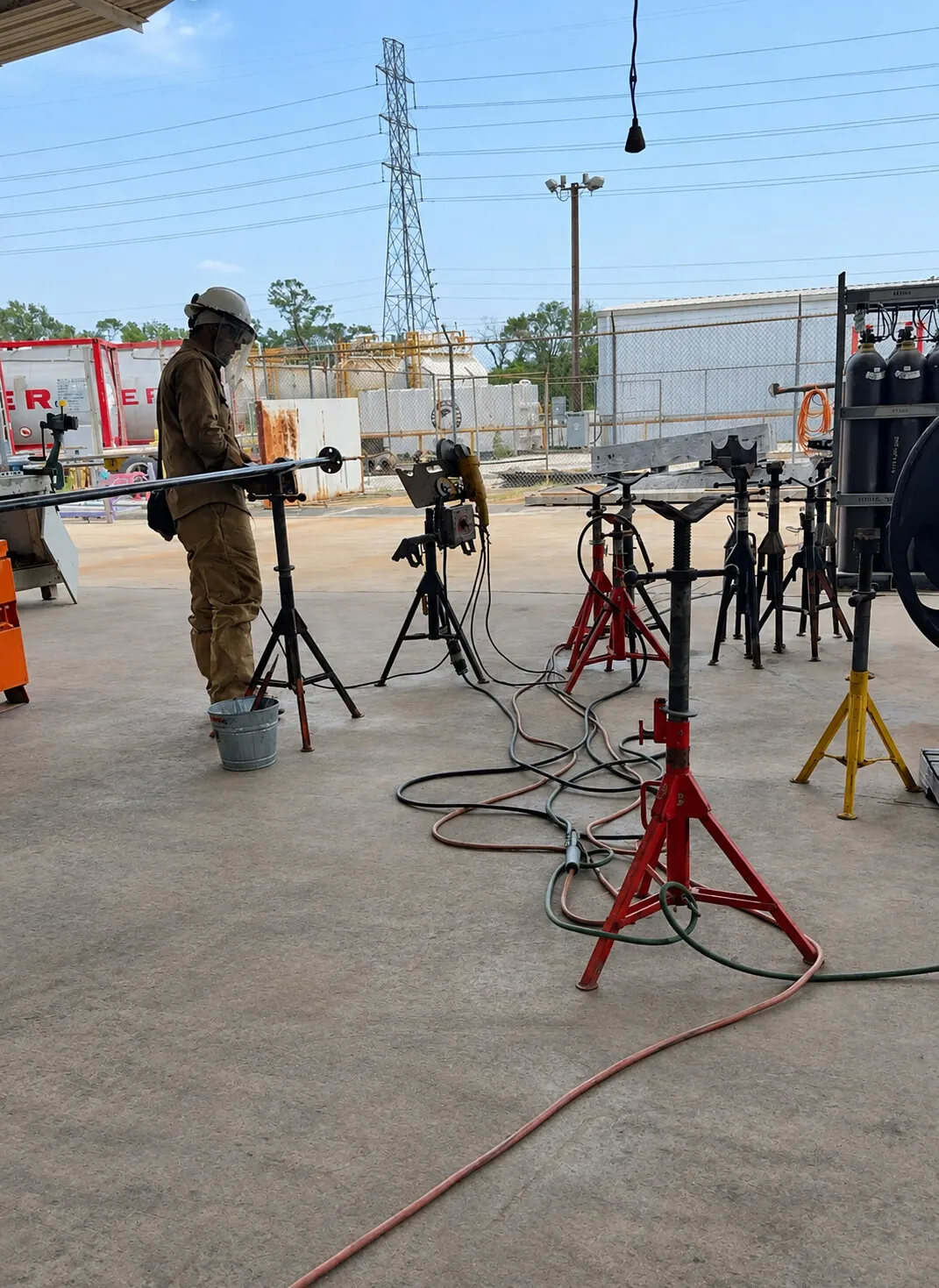
Our safety record
How we approach the work
It takes attention before the first tool is picked up, honest communication as conditions evolve, and accountability at every handoff.
Safety begins with a clear understanding of the scope. Before execution, we discuss the work area, sequence, access, equipment, and the conditions that could affect the crew or surrounding operations.
Conditions can change between a plan and the jobsite. Crews stay alert to the hazards of the task at hand, confirm the controls needed for that work, and reassess when the situation changes.
Questions and concerns belong in the open. We expect clear communication between our crews, supervision, and the customer so issues can be addressed before work continues.
When something is not right
No schedule is a reason to push through an unresolved concern. If a hazard, unexpected condition, or unclear instruction arises, the right response is to stop, raise it with the team and site contact, and clarify the path forward before proceeding.
Zero near misses never means staying quiet. We encourage reporting concerns and near misses so they can be understood and addressed.
Shared responsibility
Safe work depends on an orderly work area, attention to the task, and communication between the people fabricating, moving, and handling material. Each person has a role in noticing and raising concerns.
We coordinate with the customer on access, work boundaries, adjacent operations, and site-specific requirements. Bringing those details into the scope discussion helps everyone plan for the conditions the crew will actually encounter.
Clear expectations matter when a job moves from planning to execution or from one crew to another. Changes, questions, and unresolved hazards should be communicated rather than assumed away.
Plan the job together
Share your scope, schedule, site conditions, and any orientation, access, testing, or documentation requirements so we can review the work with the right context.